Editorial note. This preprint presents the author’s speculative theoretical model; its proposed unification, cosmological interpretation and departures from established physics are author claims, not experimentally established results. The text and equations below reproduce the source, including its ambiguities, with source defects noted separately.
Melnichenko Youri youriapostol@hotmail.com https://doi.org/10.24108/preprints-3116555
Keywords: Planck physics, monodromic algebra of the event interval quaternion, spin-momentum energy quantum, five-dimensional Möbius strip, force fields’ geometrodynamics entanglement, a new interpretation of the Dirac equation, a formal revolution in cosmology, mathematization of QCD.
Synthesis
We propose a concept and a formalism for a unified material field whose special solutions give quantum forms of gravitation, electromagnetism, strong and weak interactions in their entanglement. Formal principles are given for an estimation of electron mass, its spin, and the fine structure constant as an integer ratio. In cosmology, quantum solutions are proposed for the problems of singularity, baryon asymmetry, and the origin of “dark” phenomena.
Postulate
Our world is considered as a continuous, homogeneous, and isotropic continuum of matter–space–time, or as a unified field of energy density.
Axiom
Given the continuity, homogeneity, and isotropy of the world, the dynamics of matter is limited to a single possible wave form. Accordingly, the local energy density of the field is related to the continuum single wave function phases parameters.
Planck Physics
The fundamental basis of unified field physics is Max Planck’s Natural System of Units, which points directly to the equivalence of matter, space, time parameters or their relativity.
$$(\varepsilon_p=\sqrt{\frac{\hbar c^5}{G}})\simeq(m_p=\sqrt{\frac{\hbar c}{G}})\simeq(l_p=\sqrt{\frac{\hbar G}{c^3}})\simeq(t_p=\sqrt{\frac{\hbar G}{c^5}})\tag{1}$$
Being derivatives of three fundamental constants, these units are invariant — they are themselves constants. Physics built upon them implies the following:
Axiom 1
No sizes smaller than the units of measurement of the “Natural System” exist in nature; they would contradict the constant picture of the world (1). Consequently, all field parameters are integer.
$$(L_n=nl_p),\qquad(T_n=nt_p),\qquad(E_n=n\varepsilon_p)\qquad n\in N,\{1\le n\le N_{max}\}\tag{2}$$
Differential calculus, as accepted in modern science, has a lower limit of values at the Planck quantities. A differential “tending to zero” cannot cross this limit. Derivatives of the first and higher orders are indeterminate there and must be replaced by finite differences in integer modes. In macroscopic analysis, differential calculus remains quite acceptable, because Planck quantities are vanishingly small against the background of anthropic scales and may be treated as zero.
Axiom 2
All field parameters of individual systems are relative! A change in one of them requires a proportional change in the others:
$$\{L=(n\pm1)l_p\}\;\Vdash\;\{T=(n\pm1)t_p\}\;\Vdash\;\{E=(n\pm1)\varepsilon_p\}\qquad n\in N,\{1\le n\le N_{max}\}\tag{3}$$
The relativity of units is formally confirmed by the fact that every fundamental constant can be expressed through an almost infinite $N_{max}$ set of uniform parameters. The structure of the world is fractal.
$$n\in N,\{1\le n\le N_{max}\}$$
$$c=\frac{nl_p}{nt_p}\qquad \varepsilon_p=m_p\left(\frac{nl_p}{nt_p}\right)^2=m_pc^2\qquad G=\frac{(nl_p)^3}{(nt_p)^2(nm_p)}=\frac{(nl_p)^5}{(nt_p)^4(n\varepsilon_p)}\tag{4}$$
Axiom 3
A scalable expression of the world metric (4) is also confirmed by the existence of a single wave equation tied to its continuity, homogeneity, and isotropy. The differential of this wave equation is expressed as the difference in energy density between wave phases.
Axiom 4
The maximum permissible energy density is associated with the wave phase, in which all parameters equal unity (the lower limit of differentiability):
$$\rho_{max}=\left(\frac{3}{4\pi}\right)\cdot\left(\frac{\varepsilon_p}{l_p^3}\right)=\left(\frac{3}{4\pi}\right)\cdot\frac{\sqrt{\frac{\hbar c^5}{G}}}{\left(\sqrt{\frac{\hbar G}{c^3}}\right)^3}=\left(\frac{3}{4\pi}\right)\cdot\left(\frac{c^7}{\hbar G^2}\right)=1{,}1\times10^{113}\frac{J}{m^3}\tag{5}$$
By analogy with the ideas of quantum field theory, this phase can be compared to a material point whose interaction with similar objects proceeds through a superposition of macroscopic waves or, in the language of the same theory, through the interaction of force fields.
Axiom 5
The Planck constant is special: it determines the discreteness of energy values, while its reduced form, introduced by Paul Dirac, is tied to electromagnetism. Its fractal character therefore indicates a parametric relationship between quantum gravity and electromagnetism.
$$|m_pc^2|=|h\nu_p|\tag{6}$$
This relationship manifests itself in the fact that the mass of a charged particle (5) is functionally connected with the frequency of its electromagnetic oscillations.
$$m_q=\frac{\hbar}{(nt_p)c^2}=\frac{\hbar}{\lambda\cdot c}\qquad n\in N,\{1\le n\le N_{max}\}\tag{7}$$
where: $\lambda$ is the length of the electromagnetic wave, which determines the orbit of the charged particle relative to its interaction partner. For an electron and a proton, this is the Compton wavelength, which sets the main orbit in the hydrogen atom.
Axiom 6
The event interval of the unified field is expressed in the Natural System’s units (2) of measurement, which are the limit of differentiability.
To couple the unit of matter with the units of distance, the Schwarzschild radius is used for the unit wave phase (5), which is comparable to a material point with limiting energy density and Planck mass:
$$r_s=\frac{2Gm_p}{c^2}=2l_p\rightarrow l_p=\frac12r_s\tag{8}$$
$$(\Delta s)^2=-(t_pc)^2+l_{px}^2+l_{py}^2+l_{pz}^2+\left(\frac{Gm_p}{c^2}\right)^2\tag{9}$$
Unified Geometrodynamics of the Energy Density Field
On the basis of Hermann Minkowski’s five-dimensional analogue of space, the equation takes the form of squares of three orthogonal radius vectors: two of them (temporal and material) are one-dimensional, and one (spatial) is three-dimensional:
$$-(t_pc)^2=r_t^2\qquad(l_{px}^2+l_{py}^2+l_{pz}^2)=r_l^2\qquad\left(\frac{Gm_p}{c^2}\right)^2=r_s^2\tag{10}$$
Geometrically, this corresponds to the radial cycle of time, the spherical cycle of space, and the radial cycle of matter.
The closure of time, space, and matter follows from their wave nature. The radii are noncommutative, so the event interval must be defined as a quaternion — the simplest algebra of noncommutative, or imaginary, quantities:
$$\Delta s=ir_t+jr_l+kr_s$$
$$k=ij\ne ji=-k\qquad i^2=j^2=k^2=-1\tag{11}$$
The imaginary units of the quaternion are algebraically identical to the Pauli matrices up to a factor ($\sigma$).
$$e_1=-i\sigma_1\qquad e_2=-i\sigma_2\qquad e_3=-i\sigma_3\tag{12}$$
$$\sigma_1=\begin{pmatrix}0&1\\1&0\end{pmatrix}\qquad\sigma_2=\begin{pmatrix}0&-i\\i&0\end{pmatrix}\qquad\sigma_3=\begin{pmatrix}1&0\\0&-1\end{pmatrix}\tag{13}$$
$$e_1e_2=e_3\qquad e_2e_1=-e_3\qquad e_1^2=e_2^2=e_3^2=-1$$
This links the event interval to William Clifford’s algebra and to Paul Dirac’s gamma matrices, as Hermann Weyl envisioned:
$$\gamma^0=\begin{pmatrix}0&I\\I&0\end{pmatrix}\qquad\gamma^i=\begin{pmatrix}0&e_i\\-e_i&0\end{pmatrix}\qquad i=1,2,3\tag{14}$$
The gamma matrices satisfy Clifford algebra:
$$\{\gamma^\mu,\gamma^\nu\}=\gamma^\mu\gamma^\nu+\gamma^\nu\gamma^\mu=2g^{\mu\nu}I_4\tag{15}$$
where:
- $g_{\mu\nu}$ is the metric of Minkowski space;
- $I_4$ – the 4I diagonal unit Weyl matrix.
Dirac equations in the quaternion algebra of the event interval
The non-additive components of the interval correspond formally (geometrically) to the two Weyl spinors in the Dirac representation. The Dirac equation in quaternion form then reads:
$$(i\gamma^\mu\partial_\mu-m)\psi=0\tag{16}$$
where:
- $\psi$ is a four-component Dirac spinor, equivalent to two symmetric two-component Weyl spinors, left and right: $\psi=\begin{vmatrix}\psi_L\\\psi_R\end{vmatrix}$;
- $\gamma^\mu$ – the gamma matrices built on quaternion units;
- $\partial_\mu=\left(\frac1c\cdot\frac{\partial}{\partial t}\quad\nabla\right)$ – the four-component action gradient;
- $m=m_p$.
As a check, let us square the Dirac equation obtained, taking account of the noncommutativity of its components. The result is the Klein–Gordon equation:
$$\left[\left(\Box+\frac{m_p^2c^2}{\hbar^2}\right)\psi=0\right]\Rightarrow[p^2c^2-m^2c^4=0]\tag{17}$$
Conclusion: Paul Dirac’s formalism for emptiness, or vacuum, emerges as a consequence of the quaternionic expression of the event interval in the five-dimensional space of a unified energy-density field.
The spin-momentum quantum of energy
Max Planck’s calculation of the energy quantum (1) and Dirac’s equation (16) point to a physical relationship between the momentum energy (G) and the angular momentum energy (h), realized on the light cone (c). Science treats these geometrodynamic forms as non-additive or, in wave terms, incapable of superposition. A further conclusion is that no other forms are observed in nature. Only two exist:
- Dissipative — radial-momentum.
- Damped — angular-momentum.
Geometrically, dissipation appears as an infinite growth of the radial parameters of a spherical wave phase, while attenuation appears as a continuous slowdown of the rotation of the same phase due to the infinite growth of its radius (4). Within the derivation of Dirac’s equation (16), the right and left Weyl spinors should be regarded as reflections of the radial-momentum and spin components of a single energy quantum — that is, its two pseudovector, or imaginary, characteristics. The imaginary Clifford units, or bivectors, are equivalent to the unoriented surface on which they are defined.
The simplest form with unoriented surfaces is the August Ferdinand Möbius strip. Through gluing, both its surface and its edge become non-orientable. A material particle and its field (5) are therefore represented as an almost infinite wave whose phases contain the shape of a five-dimensional Möbius strip. It has two unoriented surfaces: the strip itself, whose main characteristic is the midline (a circle), and the edge — a kind of spiral stretched along the circumference, along the midline.
Gravity, Electrostatics, Electrodynamics
The quaternion parameters of the energy quantum under consideration have an obvious expression: its momentum component (the right Weyl spinor) is the source of the particle’s gravity, and the spin component (the left spinor) is the source of its electromagnetism. On the surfaces of the strip, the first is associated with the total area, or with the midline, and the second with the edge.
But at the edge another component, tied to its properties, is dynamically realized: the precession (external cyclic dynamics, or rotation) of the axial spin vector. How can two processes associated exclusively with spin be distinguished? In every respect precession is identical to spin, but it is realized in a plane orthogonal to spin. Another, third imaginary unit! Two imaginary units tied to one spin suggest two components of electromagnetism: electrostatics and magnetism, the latter being empirically connected with the dynamics of electric charge.
Thus, from the five-dimensional event interval of the energy-density field we arrive at the quaternion of gravitation, electrostatics, and electrodynamics!
Composite energy quantum balances
In the absence of energy losses in the continuum, continuous coexistence — stability — and a parametrically defined phase sequence (4) of topologically related momentum and spin are possible only through the continuous transformation of one form into the other. Only at absolute local energy balance do dissipation and attenuation vanish and geometrodynamics remain unchanged: “material points” and their fields persist eternally. Since all this can happen only at the scale of the accepted units of measurement, the following balance equation can be proposed:
$$\left|\frac12m_pc^2\pm\delta_i\right|\wedge\left|\frac12\hbar\nu_p\mp\delta_s\right|\cup\varepsilon_p\tag{18}$$
where:
$\pm\delta_i$ – a defect of momentum-energy dissipation; $\mp\delta_s$ – a defect of spin-energy attenuation.
Passing to three components (momentum, spin, precession) modifies this equation:
$$\left|\frac12m_pc^2\right|+\left\{\left|\frac12\hbar\nu_p\right|_s\vee\left|\frac12\hbar\nu_p\right|_\sigma\right\}\cup\varepsilon_p\tag{19}$$
where:
s — spin σ — precession
In fact, the balance of the dissipation and attenuation defects is realized in the magnetic component of the field with a phase shift equal to π or to units of time (7). Here we consider the kinetic part of the energy — the equivalent of the rest mass of the material point mentioned in Axiom 4 — its spin equal to 1/2ħ, and the precession spin, also equal to 1/2ħ.
The three quaternionic components of this quantum have a tensor, or bivector, character. The previously identified condition of stability, or transformation, of their energy therefore implies — within the principle of minimalism — that their vector sum equals zero, which corresponds to the definition of emptiness, i.e., the physical vacuum: the very state that occupies almost the entire volume of our world and that Dirac studied at the beginning of the last century. However, the phase shift (π), that is, the lag of spin precession behind Weyl’s right-hand gravity spinor and behind the spin itself by one Planck unit of time, should introduce an imbalance in favor of gravitational energy.
$$\vec{\varepsilon}_{G\hbar}=\vec{\varepsilon}_{p(i)}+\vec{\varepsilon}_{p(\sigma s)}=\vec{\delta}_i\tag{20}$$
This expression indicates the sole source of the rest mass of the material quantum. It has a geometric origin and requires neither external fields (the Peter Higgs mechanism) nor renormalization. The mass of a particle is determined by the magnitude of the violation of synchronization between its momentum and spin components.
$$m_{\varepsilon G\hbar}=m_p\cdot\theta_{G\hbar}\qquad\theta_{G\hbar}=const\tag{21}$$
where: the angle of violation of the spin–momentum synchronization. For an electron, this value is on the order of $\theta_{G\hbar}10^{-23}$ radians. An analytical definition of this angle has not yet been found, but the principle suggests a geometric solution to the gradation of the masses in the Standard Model.
Unified Geometrodynamics on the Möbius Strip
The quaternionic event interval (10, 11) is an algebraic form of the Möbius strip whose wave analogy reveals the general physics of microprocesses in the five-dimensional continuum — the energy-density field.
The three imaginary units of the interval correspond to the three dynamic analogues of the strip: the momentum realized at the midline, the spin realized at the edge, and the precession of the spin, tied to the special geometry of the strip. The noncommutativity of the quaternionic units reflects the non-additivity of the strip’s components, and the imaginary units correspond to the disorientation of its surface.
The accepted energy balance (18,19) or the assumption of the existence of a composite quantum requires determining the form of correlation of non-additive values of momentum and spin, i.e., their empirical equality (6). $\varepsilon_{Gh}$ To solve this problem, let us model the material wave as a Möbius strip embedded in the five-dimensional continuum space, focusing on the event interval.
In such a space, the strip is realized on the factor-space of four squares:
$$\mathrm{M}=\bigcup_{k=1}^{4}([0,1]\times[0,1])_k\,/\sim$$
where the relation "~" is given as follows: $(0,\tau)_k\sim(1,1-\tau)_k\quad\tau\in[0,1]$
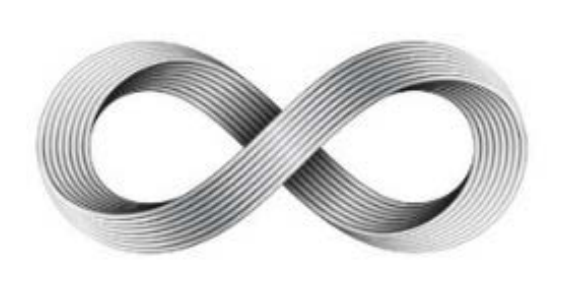
Figure 1 The Möbius strip is a composite quantum
Topological invariants of the strip:
- Fundamental group $\pi_1(M)\cong Z$
- Euler characteristic $\chi(M)=0$
- First Stiefel–Whitney class $w_1(M)\ne0\quad\in H^1(M,Z_2)$
Equation for the parameterization of a 5D Möbius strip
$$\mathcal M_{(nl_p\theta\varpi\beta)}=\begin{bmatrix} R_n\cos\theta\left(1+\frac{\varpi}{2}\cos\frac{\theta}{2}\right)\\ R_n\sin\theta\left(1+\frac{\varpi}{2}\cos\frac{\theta}{2}\right)\\ \frac{\varpi}{2}\sin\frac{\theta}{2}\cos\beta\\ \frac{\varpi}{2}\sin\frac{\theta}{2}\sin\beta\\ \frac{\varpi}{n} \end{bmatrix}\tag{22}$$
The five dimensions are represented as follows:
$n\cdot l_p=R_n\quad n\in N\quad n\ge1$ the scaled, or quantized, radius of the midline;
$\theta\in[0,2\pi]$ – the angular coordinate along the midline (a full rotation); $\varpi\in[-1,+1]$ – the coordinate across the strip, with its width normalized; $\beta\in[0,2\pi]$ the internal quaternion parameter, equivalent to the SU (2) matrix:
$$\left[\left\{q_{(\beta)}=\cos\frac\beta2+\sin\frac\beta2\,\hat v\right\}\quad\left\{\hat v=v_xi+v_yj+v_zk\right\}\quad\left\{v_x^2+v_y^2+v_z^2=1\right\}\right]\sim(S^3\cong SU(2))$$
$\beta$ It is geometrically proportional to the ratio of the twist constant (1, 2, 3, ...) to the radius of the midline: the smaller the radius, the shorter the midline and the steeper the twist angle per unit of its length.
The fifth component of the strip parameterization has a special meaning: it shows the ratio of the oscillation periods of the correlated spin and momentum components of a single wave phase. Theoretically, these ratios should equal unity, so this parameter should also equal one. However, a factor can disrupt this ratio: the precession of the spin, tied to the geometry of the strip. Its axial vector is orthogonal to the axial spin vector.
Because of the strip geometry, the average lengths of the midline and the edge are related as 1:2. Therefore the effective spin of the strip as a physical unit is 1/2 (a fermion), while the total spin at the edge is 1 (the basis of electric charge). It is realized through a 4π reversal caused by precession: the cycle completes after two momentum periods and two half-cycles of precession.
In absolute terms, all precession parameters are identical to the spin parameters. Yet the precessional time insertions (a synchronization violation per unit of time) inevitably introduce certain defects into spin interactions. If spin is regarded as a gyroscope, precession acts as an external force creating resistance. This may be the source of a repeatedly accumulated defect equal to 137 units of time, or 137 quanta of energy. I suppose that this is how the fine structure constant — an analogue of electric charge — arises:
$$\frac{\varpi}{n}=\frac{t_p}{137t_p}=\frac1{137}=\alpha\tag{23}$$
Editorial note. The author proposes an exact value of $1/137$ and discusses the difference from CODATA later in the paper. The [2022 CODATA adjustment](https://physics.nist.gov/cuu/pdf/RevModPhys.97.025002.pdf) gives $\alpha^{-1}=137.035999177(21)$; the exact value proposed here differs from that measurement.
The Correlation of the Momentum, Spin, and Precession Components
A ribbon is a formal, geometric representation of a complex wave that includes momentum, spin, and precessional components. The first is associated with the unoriented surface, or with the midline — the circumference of the ribbon; the second with the edge, or twist. The phase velocities of the momentum and spin components are the same (c), but they are topologically separated: each is realized in a different set of hyperplanes — four squares of the factor-space of the Möbius strip.
The amplitudes of the components are the same, proportional to the surface energy density of the strip. The ratio of the conventional lengths of the midline and the edge gives the effective spin: the conditional radius of the edge is twice the radius of the midline. Within one complete cycle of the momentum component, the spin component completes only half a cycle — hence the effective spin equals 1/2, a fermion!
Another feature of the Möbius strip becomes extremely interesting: a complete spin cycle must be accompanied by a complete precessional cycle — a rotation of the spin pseudovector in the plane perpendicular to the momentum (across the strip).
If momentum and spin correspond to gravity and electrostatics, then what corresponds to spin precession? Energetically, it is equivalent to spin, so it should correspond to magnetism! The precession of the spin current creates a static magnetic field — an anomalous magnetic moment (g-2). Geometrically, the magnetic moment coincides with the midline of the spin pseudo torus, a closed spiral of precessing spin stretched along the midline. It looks like an induction coil!?
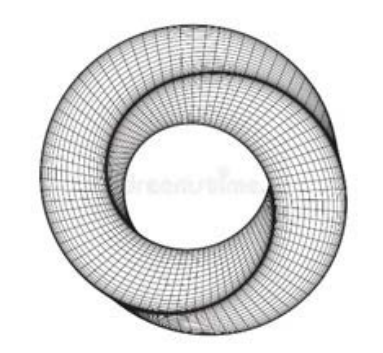
Figure 2 Precession of the spin on the Möbius band
In this light, the Möbius strip is an ideal model of the simplest fermion — an electron or a positron.
Purely formally, the model considered can be represented as three non-additive radius vectors connected by two ideal symmetries:
- The momentum energy tensor (realized on the circumference of the midline of the strip).
- The spin energy tensor (realized at the edge of the strip, orthogonal to the momentum tensor vector) (symmetry 1).
- The energy tensor of spin precession (realized on the circumference of the pseudo torus, or on the twist of the ribbon, orthogonal to the axial spin vector) (symmetry 2).
In interactions of composite quanta, such symmetries will inevitably be violated, and the formal values of these violations (defects) will inevitably obey the general laws of Planck physics (postulates 1–6). Therefore, the basis of QCD should be sought here.
Unified Wave Function
The parameters defined in formula (22) constitute a specific definition of a quantum — the simplest material particle of our world — characterized by five parameters capable of influencing interactions to varying degrees. For example, the effective spin 1/2 defines this particle as a fermion whose charge is equivalent to integer spin.
The presence of the quantum number “n” in the strip parameters indicates the modal structure of the wave function. Geometrically, this resembles a sequence of nested 5D phase spheres with a radial periodicity equal to one unit of length. Taking quantum certainty and the coupling of wave parameters into account, the surface energy density of such spheres is defined for gravity as follows:
$$\psi_i=\rho_n=\frac{n\varepsilon_p}{4\pi(nl_p)^2l_p}=\frac1n\cdot\frac{\varepsilon_p}{4\pi l_p^3}\propto\frac1n\cdot\varepsilon_p\qquad n\in N,\{1\le n\le N_{max}\}\tag{24}$$
A surface is a physical volume equal to the product of the area of the sphere and the unit distance.
This equation gives the total energy of the gravitational field of a material point (5). Its value is related to an almost infinite sum of the harmonic series:
$$E_G=\varepsilon_p\cdot\sum_{n=1}^{N_{max}}\frac1n\approx\varepsilon_p(\ln N_{max}+\gamma)\tag{25}$$
where $\gamma\approx0{,}57721$ is the Euler–Mascheroni constant.
If we take the scale of quantum mechanics ($10^{20}l_p$), then the sum of the series will be $\approx46{,}052+\gamma\approx46{,}629$. That is, the total gravitational energy of the Planck mass on the scale of quantum mechanics 47 quanta; the fractional approximations reflect the uncertainty of this logarithmic sum (25).
The spin component has its own specifics: its value is influenced by the fifth coordinate of the Möbius strip (22) — the ratio of the width of the band (the main characteristic of spin) to the radius of its midline (the main characteristic of momentum). This is the chromodynamic parameter that sets the degree of asymmetry between gravitation and electrostatics in interaction. I believe that this is the well-known fine structure constant, which determines charge within the “Natural System of Units”.
$$V=\frac{\varpi}{n}=\frac1{137}=\alpha\tag{26}$$
It follows from this correlation that the electrostatic field has its own set of 5D spherical modes, distinct from the gravitational one yet combined with the gravitational series.
The energy density of the electrostatic modes is determined by the relation:
$$\psi_s=\rho_s=\frac{n137\hbar\nu_p}{4\pi(n137l_p)^2l_p}=\frac1{n137}\cdot\frac{\hbar\nu_p}{4\pi l_p^3}=\frac1n\cdot\frac{\alpha\hbar\nu_p}{4\pi l_p^3}\qquad n\in N,\{1\le n\le N_{max}\}\tag{27}$$
This equation shows that the electric and magnetic charges are, in a certain sense, related to the total energy of the 137 spin levels, while the mass of the charge is related to only one — the first — level of the gravitational component (22):
$$q_e\sim q_\mu\sim\left\{\hbar\nu_p\cdot\sum_{k=1}^{137}k=(\hbar\nu_p\cdot9453)\right\}\tag{28}$$
The limiting energy density of the charges is equal to:
$$\rho_q=\frac{3\cdot9453\cdot\hbar\nu_p}{4\pi(137\cdot l_p)^3}=4{,}07\times10^{107}\,\text{j/m}^3\tag{29}$$
This is 6 orders of magnitude below the limiting density of gravitational energy (5).
With the precession, or magnetic, component taken into account, the unified energy-density function consists of three non-additive components: two orthogonal spin elements (the Pauli prohibition) and the momentum!
It can be treated as the energy field of an electron, or as an analogue of the Lagrangian of a composite quantum.
$$\psi_{is}\ni\left[\left(\frac2n\varepsilon_p\right)_i\wedge\left(\frac1n\alpha\hbar\nu_p\right)_s\wedge\left(\frac1n\alpha\hbar\nu_p\right)_\sigma\right]=\frac1n\left[2\varepsilon_{pi}\wedge\alpha\hbar\nu_{ps}\wedge\alpha\hbar\nu_{p\sigma}\right]$$ $$n\in N,\ 1\le n\le N_{max}\tag{30}$$
where:
- i — momentum;
- s — spin;
- σ — precession
Here we should return to Axiom 5.
Equation (27) defines the scale of the electromagnetic field as $(137l_p)$. That is, the quantum number n used in equation (7) must be divided by 137. Then we obtain
$$m_e=\frac{137\hbar}{(nt_p)c^2}=\frac{\hbar}{\lambda_c\alpha c}\qquad n\in N,\{1\le n\le N_{max}\}\tag{31}$$
where is the Compton wavelength. $\lambda_c$
The formal value of the electron mass was thus obtained as a function of the Compton wavelength and the electric charge.
The physical meaning of the boundaries equivalent to the fine-structure constant and the Compton wavelength
The proposed transition from the traditional event interval of a single energy-density field to the quaternion of entanglement of gravitation, electrostatics, and magnetism shows that the smaller the distance considered, the stronger the entanglement. Logic suggests that the distance between two like charges must involve an energy barrier; once it is overcome, nuclear reactions must follow. The fine structure constant determines this barrier. On the other hand, a particle manifesting itself as a source of both gravitation and an electric field cannot extend beyond another barrier, set by a much greater distance where the entanglement is discharged — and this is obviously the Compton wavelength. These two boundaries determine the inviolability of the atom in the macrocosm, i.e., the existence of geometrically stable matter.
The quantum form of Isaac Newton’s and Albert Einstein’s laws
A single field may be regarded as a gradient with respect to energy density. Interaction is then associated with a superposition, or a vector sum, of gradients.
The basic wave equation representing the distribution of gravitational energy density of one quantum unit of mass is as follows (22) ***:
$$\psi_i=\rho_n\propto\frac1n\varepsilon_p\qquad n\in N\le N_{max}\tag{29}$$
Accordingly, the gradient of the gravitational energy density is represented as follows:
$$\varphi_{(\vec r)}=\nabla\psi_{(n)}^{im}\cdot\left(\frac{\vec l_p}{l_p}\right)=\varepsilon_p\vec r\cdot\left(\frac1n-\frac1{n+1}\right)=\varepsilon_p\vec r\cdot\frac1{n(n+1)}\tag{30}$$
where $\left(\frac{\vec l_p}{l_p}\right)$ is the unit vector of the radial direction - $\vec r$.
$$l_p^2n(n+1)\cong R_n^2\qquad n>1\tag{31}$$
After deciphering the energy quantum, substituting the unit distance into the numerator and denominator, and passing to modular quantities, we obtain:
$$\left|\varphi_{(\vec r)}\right|=\left(\frac{l_p^3}{t_p^2}\right)\frac{m_p}{R_n^2}\rightarrow\left(\frac{l_p^3}{t_p^2m_p}\right)\cdot\frac{m_p\cdot m_p}{R_n^2}=G\cdot\frac{m_p\cdot m_p}{R_n^2}\tag{32}$$
This is Isaac Newton's equation of gravitational strength, but with a radical difference. We consider a material field limited by the velocity of gravitational waves “c”. Remarkably, the formula works over the entire depth of the field — down to one unit distance (n=1) and down to one Planck mass! $m_p$
Covariance with respect to general relativity can be tested just as easily by imposing a single condition on the quantum number. At this scale, Minkowski space is practically flat, and Einstein’s tensor takes the classical form: $n\gg1$
$$G_{\mu\nu}=\frac{8\pi G}{c^4}T_{\mu\nu}\qquad T_{\mu\nu}=diag(\rho c^2,p,p,p)_{\mu\nu}\tag{33}$$
From equation (22), the energy density and the gravitational pressure are equivalent and equal to:
$$\rho=\frac{\varepsilon_p}{4\pi r l_p^2}\qquad p=\rho c^2\tag{34}$$
Substituting these values into Einstein’s equation yields all components of the tensor.
$$G_{00}=\frac{8\pi G}{c^4}\rho c^2=\frac2{rl_p}\qquad G_{rr}=\frac{8\pi G}{c^4}\rho c^2g_{rr}=\frac2{rl_p}g_{rr}\tag{35}$$
$$G_{\theta\theta}=\frac{8\pi G}{c^4}\rho c^2r^2=\frac{2r}{l_p}\qquad G_{\phi\phi}=G_{\theta\theta}\sin^2\theta=\frac{2r}{l_p}\sin^2\theta$$
The resulting components have the dimension appropriate to general relativity and are greatly simplified by the quantum-field formalism, down to the Planck length. They show no signs of singularity, reaching a maximum at radius 1; the energy density carries the sign of rotation (1/r) ****.
The structure of the unified field naturally generates a gravitational field that corresponds to the General Theory and contains predictive factors for astrophysics.
Conclusion: the theories of Newton and Einstein lose their fundamental character and become emergent with respect to a single energy-density field.
The quantum form of Charles Augustin de Coulomb’s law
The wave function of the spin component of the unified field can be considered as a gradient of the spin energy density (16):
$$\psi_{s(n)}=\frac{n137\hbar\nu_p}{4\pi(137nl_p)^2l_p}=\frac1n\cdot\frac{\alpha\hbar c}{4\pi l_p^2}\qquad n\in N\le N_{max}\tag{36}$$
$$\varphi_{s(\vec r)}=\nabla\psi_{s(n)}\cdot\left(\frac{\vec l_p}{l_p}\right)=\vec r\cdot\frac{\alpha\hbar c}{4\pi l_p^2}\left(\frac1n-\frac1{n+1}\right)=\vec r\cdot\frac{\alpha\hbar c}{4\pi}\frac1{l_p^2n(n+1)}\tag{37}$$
where $\left(\frac{\vec l_p}{l_p}\right)$ is the unit vector of the radial direction - $\vec r$.
$$l_p^2n(n+1)\cong R_n^2\qquad n>1\tag{38}$$
$$|\nabla\psi_{s(n)}|=\frac{\alpha\hbar c}{4\pi R_n^2}\tag{39}$$
“α” is equivalent to the square of the electron charge expressed through the Planck charge
$$e^2=\alpha q_p^2\tag{40}$$
Therefore, the Coulomb constant can be expressed as follows: Converting the energy gradient into the Coulomb force then gives: $k=\frac{\hbar c}{q_p^2}$
$$F_{en}=\frac{\hbar c}{q_p^2}\cdot\frac{e^2}{R_n^2}=k\frac{e\cdot e}{R_n^2}\tag{41}$$
Thus, an exact expression of Coulomb’s force law for electron charges has been obtained. It remains to compute the electric constant: within the applied Planck formalism, it is a function of the squares of the electron charge and the Planck charge.
$$\varepsilon_0=\frac{q_p^2}{4\pi\hbar c}=\frac{e^2}{4\pi\alpha\hbar c}\tag{42}$$
Quantum forms of the strong and electroweak interactions
Within the structure of the equations considered, the definition of the strong and electroweak interactions follows quite naturally. Newton’s formula makes it possible to determine the interaction strength of two mass quanta at a distance equal to unity.
$$F_G=G\frac{m_p^2}{l_p^2}\sim10^{42}\text{Н}\tag{43}$$
The same applies to Coulomb’s equation for two electron–positron charges.
$$F_e=k\frac{e^2}{(137\cdot l_p)^2}\sim10^{37}\text{Н}\tag{44}$$
These values allow us to assume that the calculation structures described correspond to the interaction forms in question.
At the same time, the gravitational energy density gradient on scales close to unity is five orders of magnitude greater than the energy density gradient of electromagnetism. Therefore, the gravitational bond of quanta can be associated with the gluon, and the electro- (conditionally W) - magnetic (conditionally Z) - with the boson.
Matter – Antimatter
Another interesting property of the Möbius strip: it is symmetric both geometrically and physically under mirror reflection. That is, we can speak of matter and antimatter.
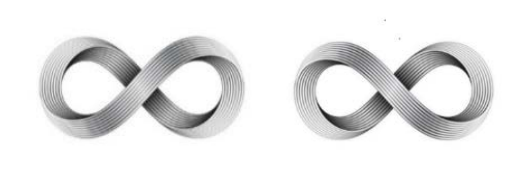
Figure 3 Mirror symmetry of the asymmetric elements of matter and antimatter
The figure shows that all three tensor components of composite energy quanta are directed strictly opposite to one another. Their interaction must therefore be antisymmetric:
- momentum–anti-momentum, gravity–antigravity;
- spin–antispin, electromagnetism–anti-electromagnetism.
Editorial note. The claimed matter–antimatter antigravity is the author’s hypothesis. The [ALPHA-g experiment](https://www.nature.com/articles/s41586-023-06527-1) observed antihydrogen motion consistent with attraction toward Earth and excluded repulsive gravity of magnitude $1g$ in that specific experiment; this does not establish every possible cosmological interaction.
Annihilation is impossible because coexistence in the same location is impossible. Matter and antimatter must be constantly moving apart. Our Universe is divided into two worlds: the world of matter and the world of antimatter; in them, wave microprocesses are antisymmetric and superposition is excluded.
This makes clear why the electron and the positron belong to the material world! Their momentum components face each other; they attract and can therefore “annihilate” because of the inconsistency of their spin frequencies. The term “annihilation” is not quite correct here: in reality nothing disappears — two of the simplest fermions transform into two simple bosons.
A Revolution in Cosmology and the Origin of Dark Matter
Obviously, such a world is divided roughly 50% to 50% by content. Most probable is an infinite number of mixed clusters, actively moving apart under antigravity and simultaneously contracting under their own gravity. The compression of clusters to maximum energy density is accompanied by an electron–positron “annihilation” explosion, as a result of which matter and antimatter appear.
They scatter and redistribute among existing and newly formed clusters — and so on, ad infinitum, in space and time. The Universe resembles an endless sequence of local explosions and local condensations, perhaps a dynamic foam in which bubbles collapse and inflate.
A phenomenological Lagrangian of such a universe is proposed:
$$\mathcal L_{+-}=\frac12(\partial_\mu\Phi_M)^2+\frac12(\partial_\mu\Phi_A)^2-\frac\lambda4(\Phi_M^2-v^2)^2-\frac\lambda4(\Phi_A^2-v^2)^2-\frac{\mathcal A}{2}\Phi_M^2\Phi_A^2\tag{45}$$
where:
$\mathcal A>0$ – the antigravity constant between the worlds of matter and antimatter; $\Phi_M\Phi_A$
$\lambda$ – a scale, a phenomenological parameter of the world, possibly the quantum constant k;
$v$ – the vacuum energy density (10) between clusters;
$\frac{\mathcal A}{2}\Phi_M^2\Phi_A^2$ – negative pressure, the accelerated-expansion factor.
The antigravity constant remains a phenomenological parameter, but its value can be determined from cosmological observations (the rate of accelerated expansion). $\mathcal A$
At the same time, most of the matter and antimatter are hidden in the Planck vacuum, in a dark form equivalent to the momentum component — the Planck mass concealed in a composite quantum. The mass, or mass equivalent, of elementary particles is only a small part, its energy being comparable to the mass of a composite quantum or an electron–positron. A quantum Lagrangian of dark matter is proposed:
$$\mathcal L_{BM}=\frac12(\partial_\mu\mathcal X)^2-\frac12m_p^2\mathcal X^2+\sqrt{-g}\left(\mathcal X^2\xi R-\theta\frac{\varepsilon_p}{l_p^3}\mathcal X\right)\tag{46}$$
where:
$\theta=10^{-23}$ is an estimated parameter of the quantum mass;
$m_p$ – the unit of mass, the Planck value;
$\xi$ is the coupling constant with the curvature R;
$\frac{\varepsilon_p}{l_p^3}$ – the maximum field energy density;
$\mathcal X$ is the field hidden in the quantum $\varepsilon_{G\hbar}$ of the total energy of the momentum.
Fundamentals of Quantum Chromodynamics
My knowledge of modern chromodynamics is very limited, so I will try to set out the basics of my hypothesis as applied to this area.
Obviously, all existing forms of the Standard Model can arise only in regions where the energy density approaches its limiting value (5)(27), that is, at distances close to the unit distance. Here the energy-density gradients of momentum and angular momentum reach maxima of up to 1/2 of the Planck unit of energy per unit distance. At the same time, as quanta converge, the momentum energy-density gradient grows significantly faster than the spin-energy density gradient. The gravitational attraction force (43) exceeds the electrostatic force (44) by 5 orders of magnitude. I therefore take the liberty of asserting that the strong and electroweak interactions are not associated with any fundamental fields: they are forms of gravitation and electromagnetism at very small scales, close to 137.
Given the topological basis of particles and their fields, complex elements of matter — neutrons, protons, and others containing two or more particles — can be assumed to form through the cohesion, or entanglement, of individual Möbius strips or, as mentioned earlier, of electrons and positrons.
Confinement
In the region of the limiting energy density 5D, spin-momentum waves of two quanta (an electron and a positron) can undergo a kind of super-positional fusion or entanglement of their ribbons by aligning along one of the gravitationally related squares of factor-space (22). Such cohesion can be identified with a gluon. That is, confinement is not an exchange of gluons, as it is interpreted in standard QCD, but an energetically stable superposition of gravitational components of two or more material quanta.
The sum of the energies of the merged squares cannot exceed one quantum, so part of the energy, the second quantum, is released. It is this that can be correlated with the gluon. This is the very defect of gravitation that must be balanced by the defects of the two spin and two precessional components of the interacting quanta. They obey the Pauli’s exclusion principle. All their axial vectors must be orthogonal. The transition to the mutual orthogonality of the four axial vectors requires energy expenditure. This is the defect of the spin and precessional energy — the W and Z bosons. The mutual orthogonality of the four, originally collinear vectors create an electromagnetic symmetry that defines the unit charge of QCD - the colorlessness inherent in such a binary boson as a photon. $(\varepsilon_p)(\varepsilon_p)(\pm)$
The same confinement mechanism can be proposed for more complex particles, such as quarks and baryons. The principle is that three Möbius strips can be formally aligned on four squares of the same factor-space:
| Square | $Q_1$ | $Q_2$ | $Q_3$ | $Q_4$ |
|---|---|---|---|---|
| A | $Q_1$ | $Q_2$ | $Q_3$ | $Q_4$ |
| B | $Q_1$ | $Q_3$ | $Q_4$ | $Q_2$ |
| C | $Q_1$ | $Q_4$ | $Q_2$ | $Q_3$ |
Table 1
The square $Q_1$ is stationary in all three ribbons – the result of the superposition of gravitational components and the permutation of spin-precessional components. It is also the axis of rotation. In this case, the result of the permutation can only be in the form of a triangle (Pauli exclusion principle):
$$Q_2\frac{2\pi}{3}\to Q_3\frac{2\pi}{3}\to Q_4\frac{2\pi}{3}\to Q_2\tag{47}$$
All three strips are equivalent, and none is isolated. Colorlessness follows from geometry: the complete 2π cycle coincides with the sum of the circumnavigation phases. The number of possible permutations of three spin–precessional doublets taken three at a time is 6, which can be interpreted as six quarks. Uniting the quark triples within the framework of electromagnetic symmetry — the electroweak interaction — produces the neutron and the proton.
Thus, the triangular symmetry of strips based on gravity solves all the problems of baryon formation: everything is decided by gravity and electromagnetism.
Asymptotic freedom
The first modes of the wave function, or “material points” (28), are regions of the single field with the maximum permissible energy density, where the density gradient vanishes. Space and time acquire their maximum permissible parameters.
Color as the topology of the edge of a Möbius strip
I assume that, within the model considered, the three colors of standard QCD correspond to three possible orientations of the axial vectors of the spin–precessional pair relative to the momentum vector. The edge of a Möbius strip can be twisted in three ways, corresponding to the three-square roots of unity in the plane of precession.
$$w_k=e^{\left(\frac23\pi ik\right)}\qquad k\in\{0,1,2\}\tag{48}$$
These three configurations are non-additive (the Pauli prohibition), but within the confinement of three strips — or when pairs of squares of the same factor-space of Möbius strips are combined — the total asymmetry of the edges turns into symmetry, identifiable with the colorlessness of standard QCD.
Lagrangian QCD
The unified wave equation of the energy density (30) of the field of a composite quantum contains three components which, as we have found, are the three colors charges in three topologically defined configurations; it can be regarded as the QCD Lagrangian.
$$\mathcal L_{QCD}=*_{5}\{\psi_i^c\wedge\psi_s^c\wedge\psi_\sigma^c\}_{n=1}\qquad c\in\{r,g,b\}\tag{49}$$
where: – five-dimensional; c – the orientation of the ribbon edge, i.e., color; (n=1) – the first mode of the unified wave function, the limit of energy density. $*_{5}$
As a consequence, a baryon singlet (3×3 quanta) is formed by two unions (proton, neutron) of three colors triads, or quarks:)
$$\mathcal L_{bar}=*_{5}\left[\bigcup_{c\in\{r,g,b\}}\{\psi_i^c\wedge\psi_s^c\wedge\psi_\sigma^c\}_{n=1}\right]\tag{50}$$
Permutations of three colors give six quarks, which corresponds to SU (3). The equation presented requires neither gauge fields nor SU (3) generators as primary objects: everything derives from the topology of the Möbius strip.
The dynamics of the processes, as follows from the preceding text, is governed by two laws: Newtonian gravitation and Coulomb electrostatics; their quantum forms were given earlier (32, 41). Lagrange’s equations are built within differential calculus, which is limited in Planck physics. Therefore, dynamic transformations of the QCD Lagrangian (50) remain difficult.
Conclusion
The proposed concept of a unified energy-density field, based on Planck’s “Natural System” and the postulate of a continuous, homogeneous, and isotropic matter–space–time continuum, offers a fresh look at the foundations of modern physics.
The basis of this work is the “Law of Metric Certainty and Coherence of Parameters”, according to which every physical parameter of a system is a multiple of an integer number of Planck units. This law bounds the applicability of Heisenberg’s uncertainty principle and of Bell’s inequalities, thereby resolving the long-standing dispute between Einstein and Bohr in favor of Einstein’s determinism: “God, after all, does not play dice.”
The singularity in general relativity is declared a mathematical exaggeration, and its place is taken by a region of limiting energy density with an event horizon defined by the Schwarzschild radius.
The key topological solution is the Möbius strip, whose geometry naturally unites and synchronizes the non-additive momentum and spin components. On this basis, analytical expressions for the fine structure constant and for the electron–positron charge in terms of integers are obtained for the first time, indicating a topological rather than accidental origin of these constants.
In cosmology, the mirror symmetry of the Möbius strip predicts the equal existence of the worlds of matter and antimatter with effective antigravity between them, which explains the accelerated expansion of the universe without the involvement of ΛCDM. Dark matter is interpreted as latent gravitational energy in a quantum $\varepsilon_{G\hbar}$ or in the vacuum energy density.
Thus, the theories of Newton and Einstein, electrodynamics, and quantum mechanics lose their fundamental character, becoming emergent consequences of the single wave equation of the five-dimensional continuum.
The proposed formalism not only removes the existing contradictions of physics (singularity, the observer problem, locality) but also points the way toward a future mathematization of QCD through multi-modal entangled Möbius strips. Experimental verification of the predicted integer relations for the fine structure constant will be a decisive test of the proposed paradigm.
Suggested experiments
№1. Verification of the fine-structure constant prediction
What we check: the resulting analytical expression of the constant α
α = 1/137 = 0. (00729927)
CODATA provides:
α ≈ 1/137.036.
Difference: 0.026%.
The result claimed in this text is that every fundamental constant of our world admits a quantum, or integer, definition — including the fine structure constant, whose integer value is tied to the topology of our world (the Möbius strip). The result yields a periodic decimal, of the kind usually used in experiments.
An exact measurement of such a number is theoretically impossible. One should therefore focus on a probabilistic set of results indicating the proximity of the measured values to the periodic value 0. (00729927).
How to check: the experiment on the anomalous magnetic moment of the electron (g-2) is today the most accurate method of measuring α (accuracy ~10⁻¹⁰). If, after all QED corrections are taken into account, the value of α proves systematically shifted toward 1/137, i.e., 0. (00729927), this will be a counterargument to CODATA and a confirmation of the proposed topological model.
Where: laboratories with LKB (Paris), Harvard (Gabrielse), and UW (Washington) facilities.
№2. Search for ribbon topology in particle decays
What we test: a model in which an electron–positron pair is not a pair of point particles but an excited state of a Möbius strip with quantum numbers (n=137, k=1). Consequence: e⁺e⁻ annihilation should exhibit angular anomalies associated with the topological Berry phase.
How to check: in colliders (e.g., VEPP-2000, DAΦNE, Super KEKB), perform a precise measurement of the angular distribution of gamma quanta in e⁺e⁻ annihilation. Standard QED predicts a smooth sin²θ distribution, while the model, owing to the spiral edge of the Möbius strip, predicts a modulation of this distribution with a period that is a multiple of π/2 and a dependence on the helicity of the beams.
Where: INP (Novosibirsk), LNF (Frascati), KEK (Tsukuba).
Forecast: with statistics above 10⁹ events, a deviation of ~10⁻⁵–10⁻⁶ from QED can be detected.
№3. The search for antigravity between matter and antimatter
What we test: the thesis from the cosmological part, that the interaction of clusters of matter and antimatter gives negative pressure and antigravity (the constant A in the Lagrangian L₊₋).
How to check: search for space objects or regions with unexplained anomalies — an evident recession of space objects from nearby visible centers of attraction, up to black holes.
Notes
- The idea that no dimensions smaller than Planck’s exist was expressed by Planck himself (1899) and confirmed in the works of Barrow (2002) and Zhambaybekov and Yarulin (2019). References 1, 2, 3, 4.
Werner Heisenberg’s uncertainty principle, within the framework of the “Law of Metric Coupling of Parameters”, does not appear to hold at the scale of the quantum domain. In quantum units, the uncertainty relation has a strictly defined value.
$$\left(m_p\frac{l_p}{t_p}\right)\cdot l_p=\frac1{2\pi}h$$
All physical quantities of the system are multiples of a single integer “k”; in this particular case k = 1. The concept of fundamental uncertainty therefore loses its meaning: the product of conjugate quantities becomes strictly deterministic, taking mathematically rigorous quantized values.
On the scale of quantum mechanics ($10^{20}\cdot l_p$), the principle should hold, since the wave properties of elementary particles become detectable (the Compton boundary). Heisenberg’s principle is thus a theoretical confirmation of the wave nature of our world.
As for John Bell’s “inequalities”: they rest on an incomplete knowledge of the basic conditions but remain adequate to the present paradigm. Within the formulated Law, all parameters of a system are strictly correlated: whatever its space-temporal parameters, the measured values of all its parameters are always the same. The determinism of the systems is absolute and does not depend on time; change or measurement in one place always corresponds to change or measurement in another. Entanglement is a consequence of deterministic certainty and coherence.
The decades-old dispute between Niels Bohr and Albert Einstein over “God does not play dice” appears to be resolved in Einstein’s favor: the “uncertainties and lack of locality” in quantum mechanics are merely manifestations of the wave properties of matter.
Sakharov (1967), Verlinde (2011), and Jacobson (1995) developed the idea that gravity is not fundamental but an induced effect. References [5,6,7].
The Einstein–Cartan theory, developed in the works of Cartan (1922), Kibble (1961), and Hehl et al. (1976), establishes that space-time torsion is generated by the spin of matter. References [8,9,10].
The relationship between the geometric Berry phase and the topology of the Möbius strip has been experimentally demonstrated in optical micro resonators (Saito et al., 2023), while theoretical models (Al Yaquob, 2026; Flouris et al., 2022) show that spin 1/2 arises naturally from such a topology. References [11–16].
According to the hypothesis of Smolin (2014) and the work of Binder (2002), the fine-structure constant can be expressed in terms of integer topological parameters. References [17,18].
Editorial note. The source repeats equation numbers 29–31 on pages 10–12; they are retained as printed. On this page, the grouping of references [8,9,10] does not match every author mentioned when compared with the printed list below.
References
- Planck, M. (1899). Über irreversible Strahlungsvorgänge. Sitzungsberichte der Königlich Preußischen Akademie der Wissenschaften zu Berlin, 5, 440–480.
- Barrow, J. D. (2002). The Constants of Nature; From Alpha to Omega. Pantheon Books, New York.
- Buczyna, J. R., Unnikrishnan, C. S., & Gillies, G. T. (2011). Standard and derived Planck quantities: selected analysis and observations. Gravitation and Cosmology, 17(2), 129–140.
- Zhambaybekov K. Zh., Yarulin D. S. (2019). The role of fundamental constants in natural systems of units. Proceedings of Higher Educational Institutions. Physics, 62(5), 3–9 (in Russ.).
- Sakharov, A. D. (1967). Vacuum quantum fluctuations in curved space and the theory of gravitation. Doklady AN SSSR, 177(1), 70–73 (in Russ.).
- Verlinde, E. (2011). On the Origin of Gravity and the Laws of Newton. Journal of High Energy Physics, 2011(4), 29.
- Jacobson, T. (1995). Thermodynamics of Spacetime: The Einstein Equation of State. Physical Review Letters, 75(7), 1260–1263.
- Flouris, K., Jiménez, M., & Stojanovic, N. (2022). Curvature-induced quantum spin-Hall effect on a Möbius strip. Physical Review B, 105(23), 235417.
- Cartan, É. (1922). Sur une généralisation de la notion de courbure de Riemann et les espaces à torsion. Comptes Rendus, 174, 593–595.
- Kibble, T. W. B. (1961). Lorentz invariance and the gravitational field. Journal of Mathematical Physics, 2(2), 212–221.
- Hehl, F. W., von der Heyde, P., Kerlick, G. D., & Nester, J. M. (1976). General relativity with spin and torsion: Foundations and prospects. Reviews of Modern Physics, 48(3), 393–416.
- Popławski, N. J. (2010). Nonsingular, big-bounce cosmology from spinor-torsion coupling. Physical Review D, 83(8), 084033.
- Berry, M. V. (1984). Quantal phase factors accompanying adiabatic changes. Proceedings of the Royal Society A, 392(1802), 45–57.
- Sprinkart, N., Scheer, E., & Di Bernardo, A. (2024). Tutorial: From Topology to Hall Effects – Implications of Berry Phase Physics. arXiv:2407.10464.
- Al Yaquob, A. (2026). A Geometric Origin for Spin, Entanglement, and Gravity from 10-Dimensional Topology. Research Square, DOI: 10.21203/rs.3.rs-6364662/v1.
- Saito, S., et al. (2023). Experimental observation of Berry phases in optical Möbius-strip microcavities. Nature Photonics, 17(5), 412–417.
- Binder, B. (2002). Berry’s Phase and Fine Structure. ANU Research Repository.
- Smolin, L. (2014). The fine-structure constant as a universal unit of charge. arXiv:1407.2946.
- Barman, B., Borah, D., Das, S. J., & Roshan, R. (2022). Cogenesis of Baryon asymmetry and gravitational dark matter from primordial black holes. Journal of Cosmology and Astroparticle Physics, 2022(10), 053.
- Zeldovich, Ya. B., & Novikov, I. D. (1967). The Hypothesis of Cores Retarded during Expansion and the Hot Cosmological Model. Soviet Astronomy, 10(4), 602–607.
- Riess, A. G., et al. (1998). Observational Evidence from Supernovae for an Accelerating Universe and a Cosmological Constant. The Astronomical Journal, 116(3), 1009–1038.
- Feynman, R. P. (1948). Space-Time Approach to Non-Relativistic Quantum Mechanics. Reviews of Modern Physics, 20(2), 367–387.
- Nottale, L. (2005). Non-differentiable variational principles. Journal of Mathematical Analysis and Applications, 307(2), 486–500.
- Einstein, A., Podolsky, B., & Rosen, N. (1935). Can Quantum-Mechanical Description of Physical Reality Be Considered Complete? Physical Review, 47(10), 777–780.
- Bohr, N. (1935). Can Quantum-Mechanical Description of Physical Reality Be Considered Complete? Physical Review, 48(8), 696–702.
- Rozental, I. L. (2005). Geometry, Dynamics, Universe. Ed. URSS, M.
- Melnichenko Y. 2026 "Spin-Momentum Topology of Elementary Particles and Force Fields" Preprints.ru doi.org/10.24108/preprints-3116555